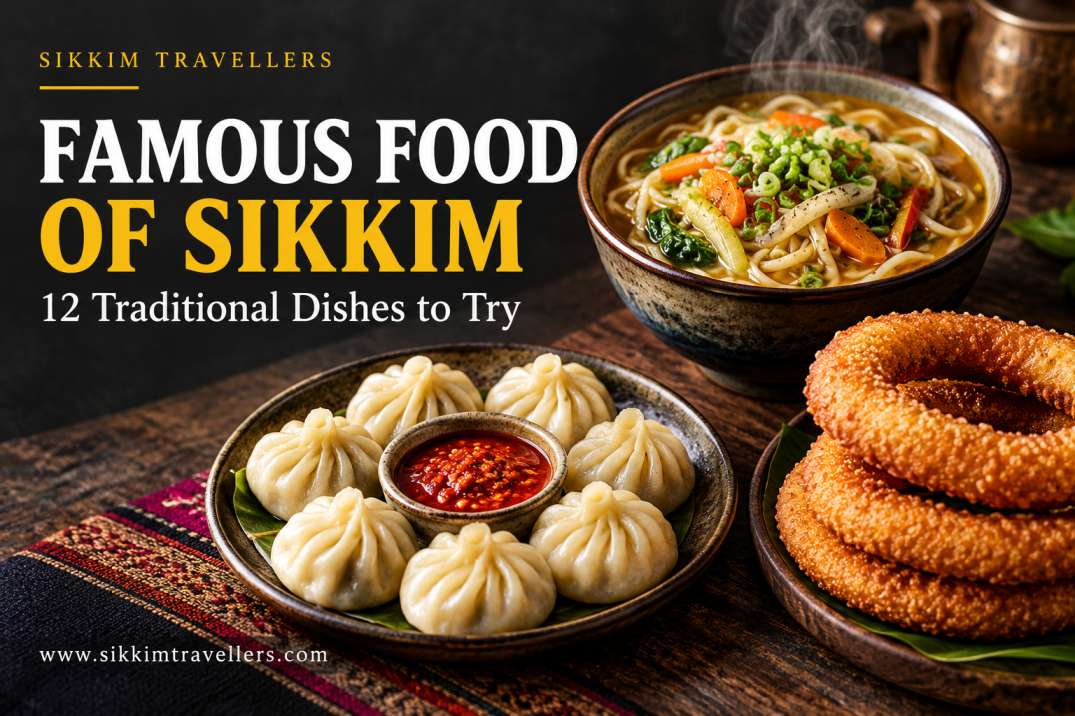
Famous Food of Sikkim: 12 Dishes | Sikkim Travellers
SIKKIM FOOD GUIDE • LOCAL FLAVOURS • TRAVEL TIPS
Get to know Sikkim, one meal at a time
Start with a plate of momos, then look beyond the familiar. Fermented greens, soybean curry, traditional cheese and rice-based snacks offer a fuller introduction to Sikkimese cuisine.
By Sikkim Travellers Editorial Team
Famous food of Sikkim includes momos, thukpa, phagshapa, gundruk, kinema, chhurpi and sel roti. Some dishes are shared across Himalayan regions rather than being exclusive to Sikkim. Their ingredients and preparation can change between communities, households and restaurants.
This guide introduces 12 dishes and preparations to look for, explains the difference between vegetarian and meat-based options, and helps you ask useful questions when ordering.
What makes traditional Sikkimese cuisine distinctive?
Sikkim’s food reflects Lepcha, Bhutia, Nepali and wider Himalayan traditions. Rice, vegetables, meat and dairy appear alongside preserved ingredients. Fermentation is especially important: it transforms leafy greens, radish, soybeans and bamboo shoots into foods with distinctive flavours.
There is no single standard Sikkimese meal. Ask what is cooked in the household or what the kitchen has prepared that day, rather than expecting every restaurant to serve the same regional menu.
Famous food of Sikkim: a quick comparison
| Food | What it is | Dietary note |
|---|---|---|
| Momos | Filled dumplings | Vegetable or meat fillings |
| Thukpa | Noodle soup | Check broth and toppings |
| Phagshapa | Pork with radish and chillies | Non-vegetarian |
| Gundruk | Fermented leafy greens | Plant-based ingredient; check recipe |
| Sinki | Fermented radish taproot | Plant-based ingredient; check recipe |
| Kinema | Fermented soybeans, often cooked as curry | Contains soy |
| Chhurpi | Traditional cheese | Contains milk |
| Ningro with chhurpi | Edible fern cooked with cheese | Contains milk |
| Sel roti | Ring-shaped fried rice bread | Check milk or ghee use |
| Sha phaley | Fried stuffed bread | Traditionally meat-filled; ask about alternatives |
| Mesu achar | Fermented bamboo-shoot pickle | Check added ingredients |
| Dalle khursani achar | Hot chilli pickle | Spice level and recipe vary |
1. Momos: a familiar first taste
Momos are dumplings with vegetable or meat fillings, commonly served with a dipping sauce. Steamed and fried versions offer different textures. Ask which filling is available and order the chilli sauce separately if you prefer less heat.
2. Thukpa: noodles in a warming broth
Thukpa combines noodles with broth and vegetables or meat. The stock matters as much as the toppings: a bowl that looks vegetarian may still use meat broth. Confirm both when ordering.
3. Phagshapa: pork, radish and chillies
Phagshapa is a pork preparation associated with radish and dried chillies. It belongs on the non-vegetarian side of your food list. Ask about the portion and accompaniments before adding several more dishes to the table.
4. Gundruk: fermented leafy greens
Gundruk has a tangy character and is used in preparations such as soup and achar. Try a small serving alongside a meal if fermented vegetables are new to you. The finished dish depends on the cook’s recipe.
5. Sinki: fermented radish
Sinki is made from radish taproots, unlike the leafy greens used for gundruk. Both are preserved foods, but they are not interchangeable names. Ask which one is being served if the menu groups them together.
6. Kinema: fermented soybean curry
Kinema is a fermented soybean food often prepared as curry and eaten with rice. It has a distinctive aroma. If you are curious but unsure, share a small portion rather than making it your only dish.
7. Chhurpi: traditional Himalayan cheese
Chhurpi is not one uniform product: soft cheese used in cooking differs from hard dried cheese eaten as a chewy snack. It is not always made exclusively from yak milk. Ask the seller about the milk source and how that particular variety is eaten.
8. Ningro with chhurpi: greens and cheese
Ningro refers to edible fern used in local cooking. One preparation pairs it with chhurpi. Ask whether it is available that day; seasonal greens are a reason to stay flexible with your food plans.
9. Sel roti: a sweet rice-based snack
Sel roti is a ring-shaped fried rice bread associated with Nepali food traditions, including those in Sikkim. Enjoy it as a snack with tea. It is different from an ordinary wheat doughnut, even if a menu uses that comparison.
10. Sha phaley: a crisp stuffed bread
Sha phaley, also written shaphaley, is a fried stuffed bread traditionally made with meat. Check the filling rather than assuming a vegetarian version is available. It makes a different choice from steamed momos when you want a crisp texture.
11. Mesu achar: bamboo-shoot pickle
Mesu is fermented bamboo shoot, used in pickle preparations. Treat it as an accompaniment rather than a main course. Ask the host how they usually serve it and taste a little before adding more.
12. Dalle khursani achar: a little goes a long way
Dalle khursani is a hot round chilli used in local pickles and sauces. Start with a small amount and keep it separate from the main dish. A mild-looking meal can become much hotter once achar is added.
Vegetarian food in Sikkim: what to ask for
Start by asking about vegetable momos, vegetable thukpa, rice, dal and seasonal vegetable dishes. Gundruk, sinki and kinema are plant-based ingredients, but the complete preparation still needs checking. Chhurpi dishes contain dairy.
- Is the soup stock vegetarian?
- Does the dish contain milk, butter, ghee, egg or meat?
- Can the chilli sauce be served separately?
- If I have an allergy, can you check every ingredient and how the food is prepared?
Finding local food in Gangtok and beyond
When exploring Gangtok, compare menus at local eateries and traditional restaurants. Ask specifically for regional dishes instead of ordering only the familiar items on a mixed menu. A busy sightseeing schedule can leave little time for a proper lunch, so keep a meal break in your day.
At a homestay, discuss meals in advance. Ask what the family normally cooks, what produce is available and whether dietary preferences can be accommodated. Do not assume that every dish in this guide is available at every stay.
For Sikkim street food, momos and fried snacks can be an easy starting point. Check what has just been prepared and ask before photographing vendors or their kitchens.
A simple tasting plan for your trip
- Start familiar: share momos and a bowl of thukpa.
- Add one new flavour: try gundruk, kinema or mesu with a rice-based meal.
- Choose a main dish: ask about phagshapa or a seasonal vegetable preparation.
- Leave room for a snack: try sel roti when available.
This is a tasting idea, not a fixed restaurant menu or meal package. Adjust it to appetite, dietary needs and availability.
Frequently asked questions about Sikkim food
What is the famous food of Sikkim?
Momos and thukpa are widely recognised, while phagshapa, gundruk, kinema, chhurpi and sel roti introduce other parts of the region’s food traditions. No single dish represents every community.
What is the staple food of Sikkim?
Rice is an important staple, often served with lentils, vegetables and other accompaniments. Everyday meals differ between households and communities.
Is all Sikkimese food spicy?
No. Heat varies by dish and recipe, and chilli pickles or sauces may be served separately. Ask for mild preparation and taste achar before mixing it into your meal.
Are gundruk and sinki the same?
No. Gundruk uses leafy greens, while sinki uses radish taproots. Both are fermented foods used in local cooking.
Is chhurpi always yak cheese?
No. The milk source and preparation vary. Ask which milk was used and whether the product is soft cooking cheese or a hard dried variety.
Can vegans eat traditional food in Sikkim?
There may be suitable options, but confirm broth, cooking fat, fillings and dairy ingredients. A vegetarian label alone does not mean a dish is vegan.
Is all food served in Sikkim organic?
Do not assume so. Ask about ingredient sourcing if this matters to you; the location of a restaurant does not establish how every ingredient was produced.
Can I try local dishes during a sightseeing trip?
Yes, you can plan time for a meal stop. Tell your travel organiser your preferences beforehand; meals and any special food experience should be confirmed separately from transport.
Make time for local food on your Sikkim journey
Discuss a sightseeing itinerary with room for meal breaks and local exploration. Sikkim Travellers can help with your transport plan; restaurant meals are separate unless expressly included.
Discuss your trip: 8250292588Continue exploring: festivals of Sikkim, Gangtok sightseeing taxis and customised Sikkim tour planning.
Further reading: Sikkim Tourism: Sikkimese Cuisine and Gangtok District: People and Recipes. Recipes and availability vary by household and establishment.